Access City Festival 2026 transformed Polis Chrysochous into an open hub of sports, accessibility, and inclusion.

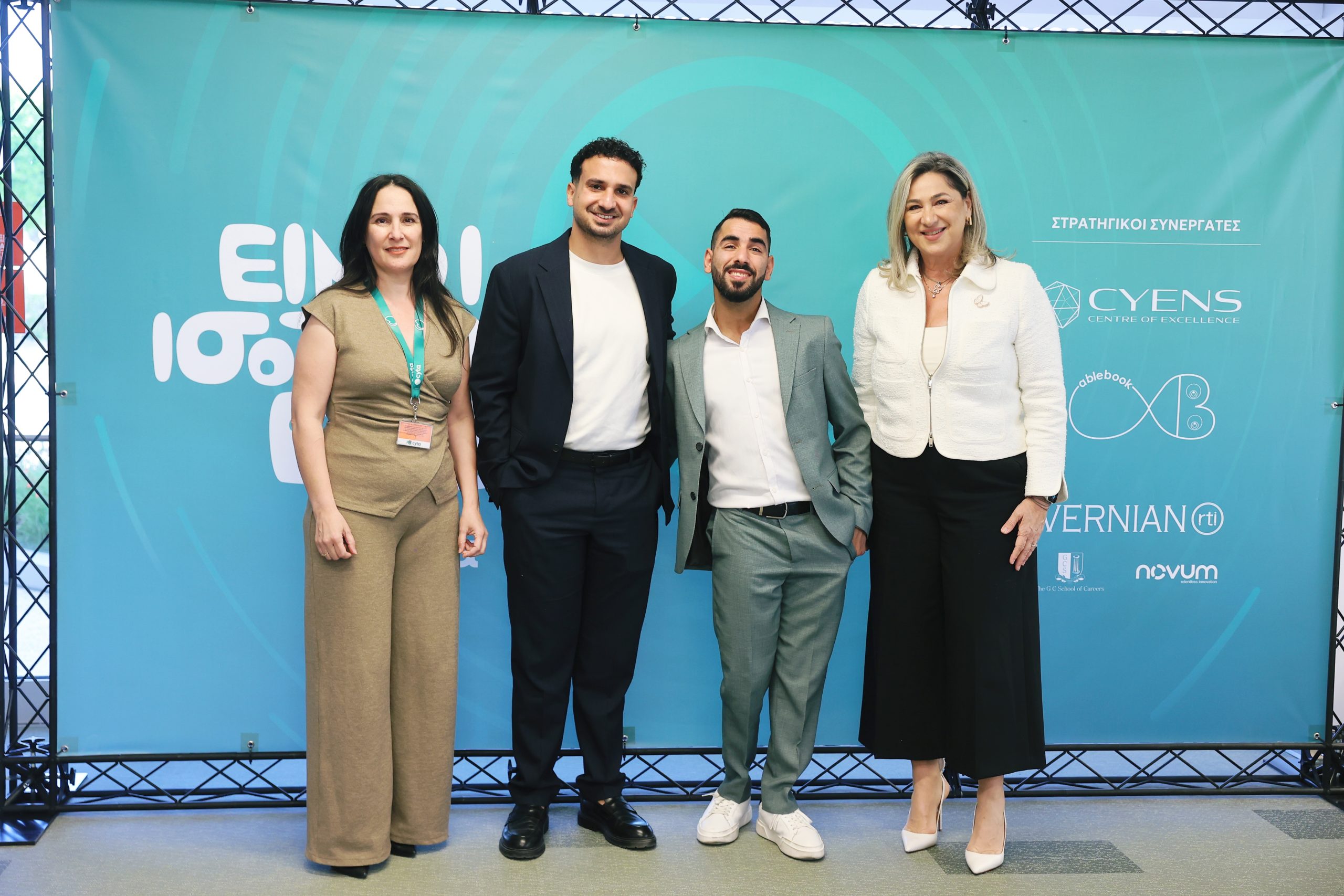
Ablebook actively participated in the Access City Festival 2026, which was successfully held on Saturday, May 16, in Polis Chrysochous. The festival was organized by the Enavsma Foundation in collaboration with the Municipality of Polis Chrysochous and Round Table 7 Paphos.

The town square was transformed into an open space of sports, experiential activities, and social awareness, promoting accessibility, acceptance, and equal participation in society and sports for everyone.

Through its participation, Ablebook presented its innovative platform and engaged with visitors through activities highlighting the importance of digital accessibility and inclusion in the daily lives of people with disabilities.

Visitors had the opportunity to experience unique para-sports activities, including archery alongside Christos Misos, the world No.1 blind archer, and wheelchair basketball with APOOP Paphos and Cyprus 3X3. The event also featured the presence of organizations such as YPARXO, Goal in Life, and Through My Eyes, founded by Paralympic swimmer Karolina Pelendritou.

The festival concluded with an open discussion on improving accessibility and the power of sports as a tool for social change, sending a strong message that cities can become more inclusive when organizations, institutions, and citizens work together with a common vision.

Ablebook warmly thanks the organizers, volunteers, partners, and everyone who participated in and supported this important initiative towards a society without barriers.

Stoiximan Wheels of Change Expands to Cyprus, Promoting Equal Access to Sports

The Stoiximan Wheels of Change team is expanding its activities to Cyprus through a new strategic partnership with Ablebook and “Yparcho”, sharing a common goal of promoting equal participation in sports.

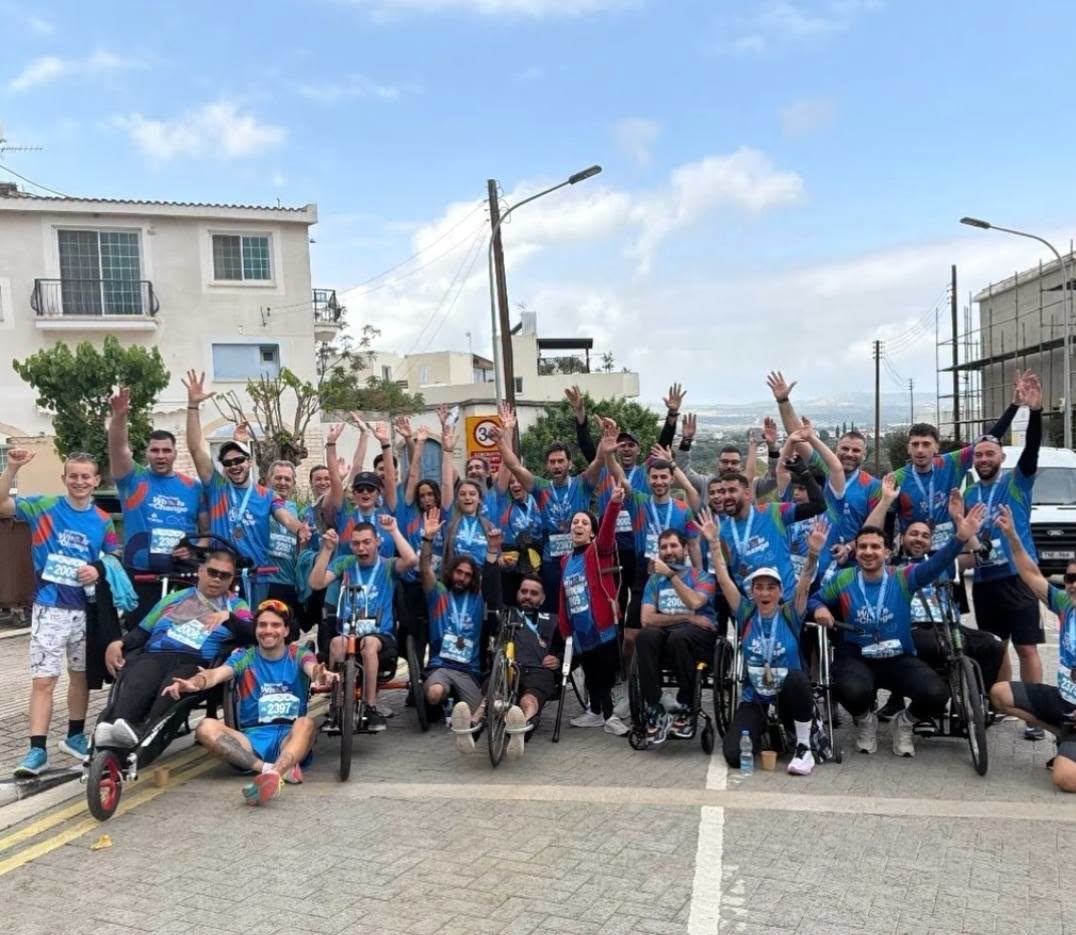
The team’s first participation in Cyprus took place during the Aphrodite Half Marathon in Polis Chrysochous on Sunday, April 19, marking the launch of the initiative’s local presence. A total of 31 participants took part, including 9 people with disabilities who participated in the 5-kilometer race.

Through this collaboration, the Stoiximan Wheels of Change program joins forces with Ablebook, an innovative accessibility and inclusion platform-app, as well as “Yparcho Education and Rehabilitation Center”, an organization focused on empowering and supporting vulnerable groups, particularly in sports. Together, they aim to significantly strengthen inclusive initiatives across Cyprus.

The Stoiximan Wheels of Change program, which has already established a successful presence in Greece with more than 5,000 participants to date, creates opportunities for people with disabilities to actively participate in sports events, highlighting in practice the importance of accessibility, teamwork, and inclusion. The initiative is also planning a strong presence in upcoming marathons in Larnaca, Limassol, and Nicosia.

Its expansion into Cyprus represents an important step toward strengthening a society without exclusions, where everyone has the opportunity to participate equally in sports and social life.

Stoiximan remains committed to creating initiatives with meaningful social impact, proving that collaboration can become a catalyst for positive change.

Because when we run together, we create a world that is more accessible for everyone.

Ablebook at the European Disability Forum with Speech by CEO Andreas Vasiliou

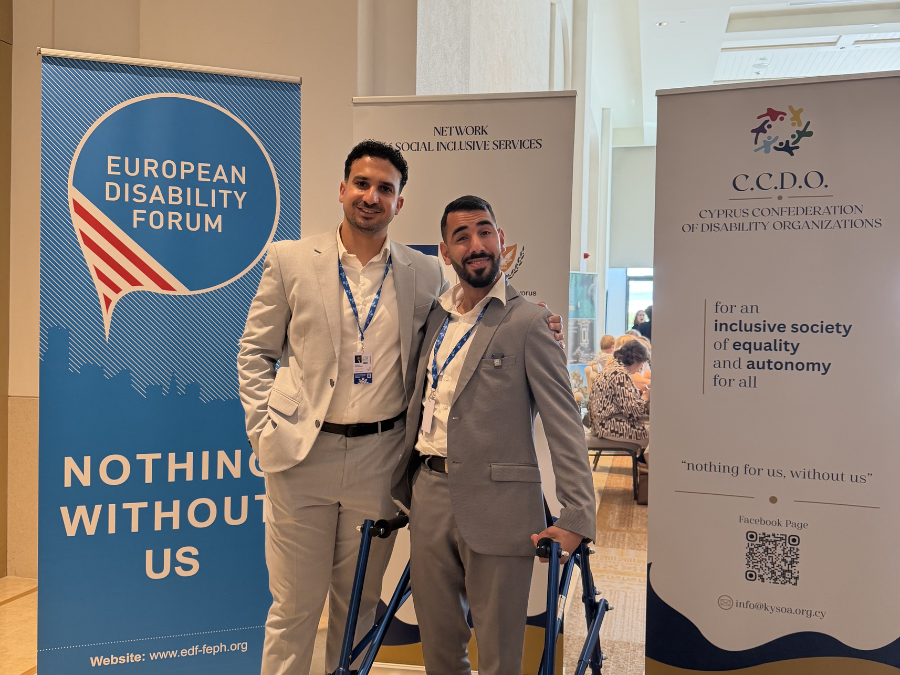
Ablebook participated in the European Disability Forum (EDF) Annual General Assembly in Cyprus, strengthening the voice of accessibility at a European level.

As part of the event, Ablebook’s CEO & Co-Founder, Andreas Vasiliou, delivered a speech in front of representatives of the European Union, organizations, and institutions from across Europe, sharing a strong message about the importance of building a truly equal and inclusive society.

During his speech, Andreas Vasiliou shared his personal journey as a person with quadriplegic cerebral palsy, highlighting the challenges he faced both in education and later in the labor market.

“The problem is not disability. The problem is the barriers created by systems that are not designed for everyone,” he stated.

He also spoke about the creation of Ablebook, which was born through real-life experiences and the need for a tool that would support people with disabilities in their everyday lives, promoting autonomy and equal participation in society.

Today, Ablebook is evolving into a comprehensive digital accessibility ecosystem through collaborations with businesses, municipalities, and institutions, offering solutions that improve the daily lives of its users.

Special emphasis was placed on the new feature AbleJobs, which aims to bridge the gap between people with disabilities and the labor market by creating equal and accessible employment opportunities.

Additionally, Ablebook presented its new features: AbleFix, AbleActivities, and AbleBook&Go, aimed at enhancing daily independence and social participation.

Closing his speech, the CEO of Ablebook called on EU Member States to move toward stronger and more binding accessibility policies, emphasizing that equality and dignity should never be considered optional.

Ablebook’s participation at the European Disability Forum confirms the company’s active role in promoting accessibility, social inclusion, and innovation, with the vision of creating a Europe without barriers.

Japan: The café where employees work remotely

The accessible, barrier-free floor of the café is filled with robotic staff.

Kentaro Yoshifuji needed to be hospitalized multiple times and for extended periods when he was a student and couldn’t go to school.
 

This experience inspired him to study robotics and “use technology to improve the lives of people who were unable to participate physically either in work or social life.”

Thus, with the help of crowdfunding and grants, he created the Dawn Avatar Robot Café, a Japanese business that shows that robots don’t necessarily take away our jobs, but on the contrary, they can help create inclusive workspaces.

The image at Dawn is as follows:

The accessible, barrier-free floor of the café is filled with robotic staff. There is a robot that greets customers, another to help them find seats, and another that suggests daily specials and takes orders. Additionally, there is the popular Tele-Barista, a humanoid “master” of coffee who will take care of the pumpkin spice latte at the bar.

However, the awkwardness of asking a robot to take your order is bypassed as patrons know it’s the human side that makes Dawn special.

The humanoid robots OriHime and OriHime-D, standing at 120 centimeters tall, serve as avatars for the workers who operate them remotely. These operators interact with customers, suggest items from the menu, and ensure that your coffee is just the way you like it.

The business employs people with disabilities to control the robots, creating inclusive job opportunities for those who cannot leave their homes or are, in many cases, bedridden.

Employees can use a mouse, an iPad, or even an eye-controlled remote to operate the robots from a wheelchair or a bed.

According to the Ministry of Health in Japan, over 7% of the population lives with a disability.

Indeed, most of the humanoid robots are equipped with iPads so that customers can interact with the person controlling them.

It should be noted that in 2012, Yoshifuji won the Human Power Award for “OriHime,” the first robot with an avatar to combat loneliness.

Source: naftemporiki.gr

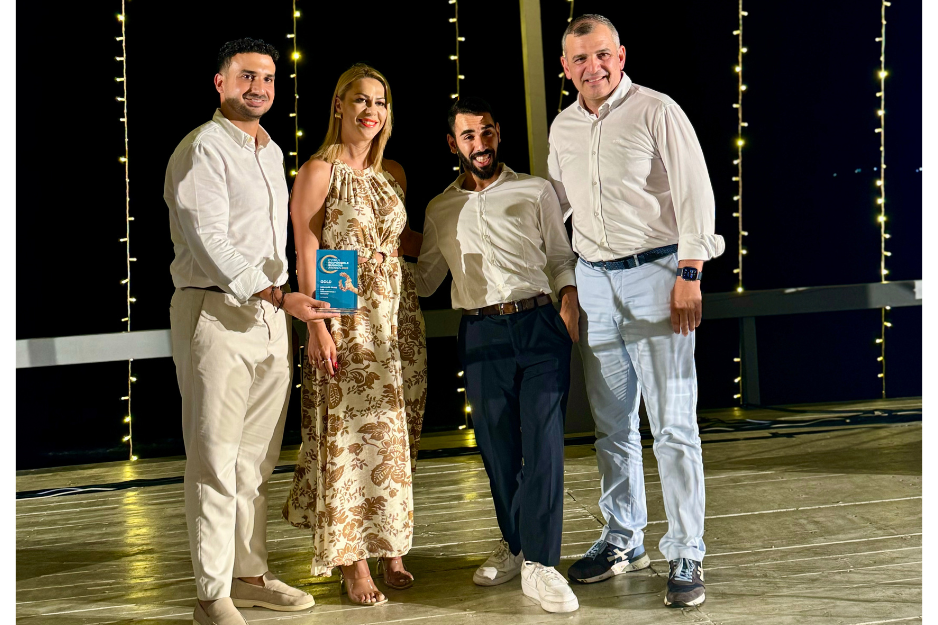
Infocredit Group Honored with Gold Award at the Cyprus Responsible Business Awards 2023

Infocredit Group is thrilled to announce its recognition at the Cyprus Responsible Business Awards 2023, organized by Boussias. The company proudly secured the esteemed Gold award. The awards ceremony was held yesterday at Galu Seaside in Larnaca.

The Cyprus Responsible Business Awards 2023 recognize and reward best practices in supporting society. Infocredit Group’s constant support for Ablebook played a pivotal role in this achievement. Infocredit Group claimed the Gold award in the “Society” category, underscoring its steadfast commitment to social responsibility and community support.

Theodoros Kringou, CEO of Infocredit Group, commented on the award: “We are honored to receive this recognition, and this award is a testament to our commitment to social responsibility. We will continue to support initiatives like Ablebook that make a positive impact on our society. We also invite other companies to join us in supporting these vital initiatives. By working together, we can create a more inclusive and supportive environment for all members of our community.”

Andreas Vasileiou, Co- Founder & CEO at Ablebook, expressed his gratitude: “The greatest thanks belong to Infocredit Group and specifically to Theodoros Kringou for his constant support. Symeon Stylianou, Data Transformation & Quality Advisor at Infocredit Group and Co- Founder & CBO at Ablebook, also stated ‘’ The support for other people has enabled us to implement actions that improve the lives of society and the people with disabilities. Our initiatives have contributed to creating a more inclusive environment for everyone. This award crowns our efforts and gives us the strength to continue our mission. We thank you from the bottom of our hearts.’’

Infocredit Group remains dedicated to fostering a culture of social responsibility and encourages others to contribute to building a better future for everyone.

Cyprus without sustainable mobility: ‘I can’t even go to the kiosk.’

Title: Miranda Lysandrou

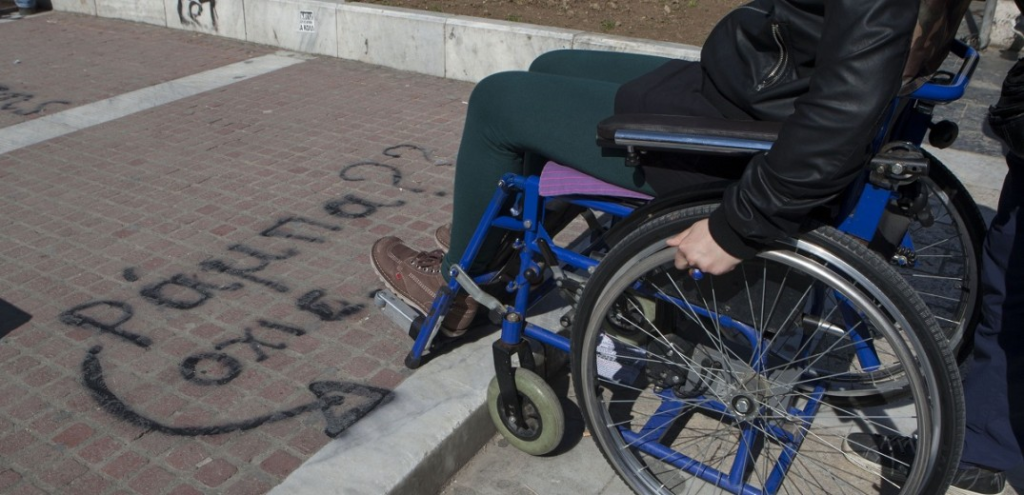
Even a ten-year-old child knows that the word “sidewalk” is a compound word derived from the words for “pedestrian” and “road.” Pedestrian-road… The road for pedestrians. Not for cars, otherwise, we would call it a parking space; not for bicycles, otherwise, it would be called a bike path; not for scooters, trash cans, trees, and other obstacles. It is the space for pedestrians. It rightfully belongs to them. And no one has the right to take it over.

We all park on sidewalks. Let’s admit it. Without even feeling guilty. Wherever they exist and are functional, that is, constructed with the correct specifications. Because the local authorities also turn a blind eye. You realize that the excuse of parking for just, supposedly, a minute doesn’t hold up. One minute for you, one minute for me, and the sidewalk is permanently occupied. Forcing pedestrians, whether fully abled or those with mobility issues, to step onto the road at the risk of their physical integrity.

In our country, the illegality regarding the occupation of sidewalks has become the norm, with the tolerance and inactivity of everyone, unfortunately, without anyone to remove the obstacles and enforce order.

The Alpha News program recorded, frame by frame, the problems faced by people with mobility issues in all cities because all of us, shamelessly, block their access. Access not just to a road, not just to a disabled parking space, but access to autonomy, social integration, equality, and without exaggeration, to the right to life.

Our fellow citizens with severe disabilities number 15 thousand. In total, 145 thousand people in Cyprus face disabilities ranging from mild to severe. All these people do not want words of comfort, nor do they need our pity. They need the development of an environment without barriers so that they can move around autonomously. So that they can go to their jobs without risk, accompany their children to school, or go out to eat with their friends without feeling different. Equality is their inalienable right, and ensuring it is our responsibility.

More at: https://www.alphanews.live/cyprus/horis-biosimi-kinitikotita-i-kypros-oyte-sto-periptero-den-mporo-na-pao

The Parliament puts a halt to the increase in fines for parking in disabled spaces

The overwhelming majority of the Parliament rejected a proposed law to increase the extrajudicial fine for parking in parking spaces designated for disabled persons by non-entitled individuals, from €300 as it stands today to €500. Four members of Parliament voted in favor, 35 against, with one abstention. The relevant proposal was submitted by MP Andreas Apostolou of the EDEK party.

The proposal that was rejected also provided that in case of repetition of the offense, the person who illegally parked would be subject to prosecution, with provisions for imprisonment for up to one year and/or a fine of up to €3,000 euros.

Speaking in the plenary session, Members of Parliament noted that the existing fine is sufficiently deterrent, while the need for additional measures beyond extrajudicial fines for better compliance was emphasized.

The proposer of the bill, MP Andreas Apostolou, stated that he does not believe he has more sensitivity than those who do not support the proposal. He noted that his proposal was supported by all the relevant authorities called to the Transportation Committee.

He expressed the opinion that there is no justification for this particular violation, as those who commit it are consciously not parking in another parking space.

He also stated that he does not believe that compliance can only be achieved through increased fines, emphasizing the need for better policing, empathy, and education on the matter. Furthermore, he welcomed the Minister of Transport’s intention to introduce legislation in the near future for measures such as towing vehicles and removing license plates. He added that he himself will submit further legislative proposals for people with disabilities soon.

MP Alexandra Attalidou also supported the bill, emphasizing the importance of respecting parking spaces for people with disabilities, whose independent mobility, she said, is crucial. She also advocated for additional measures, involving education and campaigns.

MP Christos Orfanidis of DIKO opposed the increase in the extrajudicial fine, stating that it is the beginning of a series of legislative proposals for changes in the law that provide for increases in fines for traffic violations.

He noted that an increase in a fine should occur when there is a surge in violations, and in this case, there has been a 60% decrease in complaints since 2019.

He emphasized the need for penalties to be proportional, stating that imposing such a high fine could be devastating for some families. He also mentioned that he proposed to the competent Minister the towing of vehicles, which, however, has not yet been implemented. Additionally, he characterized as populism reports he heard in the media suggesting that only those who support the proposal should be voted for in the European elections, stating that sensitivities are not a personal matter.

MP Stavros Papadouris of the Movement for Ecologists – Cooperation mentioned that some will not tolerate others invoking more sensitivities than any other colleague. He noted that there has already been an increase in penalties for the issue twice, from €85 to €300, and in the first session of the relevant Committee on the matter, both the Legal Service and the Police and the Ministry of Transport stated that further increases in penalties no longer help.

He emphasized the need for other measures such as towing of vehicles and removal of license plates, stating that both Mr. Orfanidis and himself made this recommendation to the competent Minister, who told them that they cannot proceed with these measures now. He also noted that for someone who has financial means, the increase in the fine will not make much difference, but for a vulnerable household, it creates a survival problem.

MP Marinos Mousiouttas of DIKO – Cooperation stated that in the Transportation Committee, there are still 8 proposals, most of which involve relaxing the existing measures. He mentioned that he submitted an intermediary proposal through an amendment, suggesting that the fine be increased by €100 for the first offense and €200 for the second offense, in order to reconcile opposing views. However, he said that even if his amendment is rejected, he will vote in favor of the bill. It is noted that Mr. Mousiouttas’ amendment was also rejected by the plenary.

MP Zacharias Koulias of DIKO stated that the Parliament has already passed strict legislation for a €300 fine. He also opposed large administrative fines and said, “We have gone too far on this issue.”

MP Valentinos Fakontis of AKEL stated that everyone is sensitive to the issue; however, fines should be proportionate and not have a devastating effect on society during difficult times.

He also noted that the state has much more to do before the parliament institutionalizes fine increases, such as implementing better traffic controls to curb illegality, improving the marking of disabled parking spaces, and addressing the issue of parking on sidewalks and pedestrian crossings. Additionally, he suggested that the money from fines should be spent on education to foster prevention.

The MP of DISY, Fotini Tsiridou, mentioned that there has been significant improvement with the existing penalties, and she does not believe that further draconian measures should be imposed. Regarding the second part of the proposal, she stated that the goal should not be to burden the courts with more cases on this matter. She emphasized the need for campaigns and better marking of disabled parking spaces. She also noted that the DISY government was the first to introduce a national strategy for people with disabilities.

MP Dimitris Dimitriou of DISY stated that raising awareness cannot solely rely on fines, as there are other measures that can be implemented, such as vehicle towing. He also mentioned that some might suspect Mr. Apostolou brought forward this proposal because he is a candidate for the European Parliament, but he clarified that he doesn’t believe such claims, as Mr. Apostolou has consistently been sensitive to these issues over time.

In response, Mr. Apostolou stated that the amendment in question was submitted on October 5, 2023, long before he even considered running for European Parliament.

The Member of Parliament for the Greens, Charalambos Theopemptou, mentioned that if there were good public transportation, this discussion would not be

Member of the AKEL Party, Georgios Loukaidis, stated that sensitivity is demonstrated in action in various ways, and that the €300 fine is sufficiently deterrent.

ΚΥPΕ

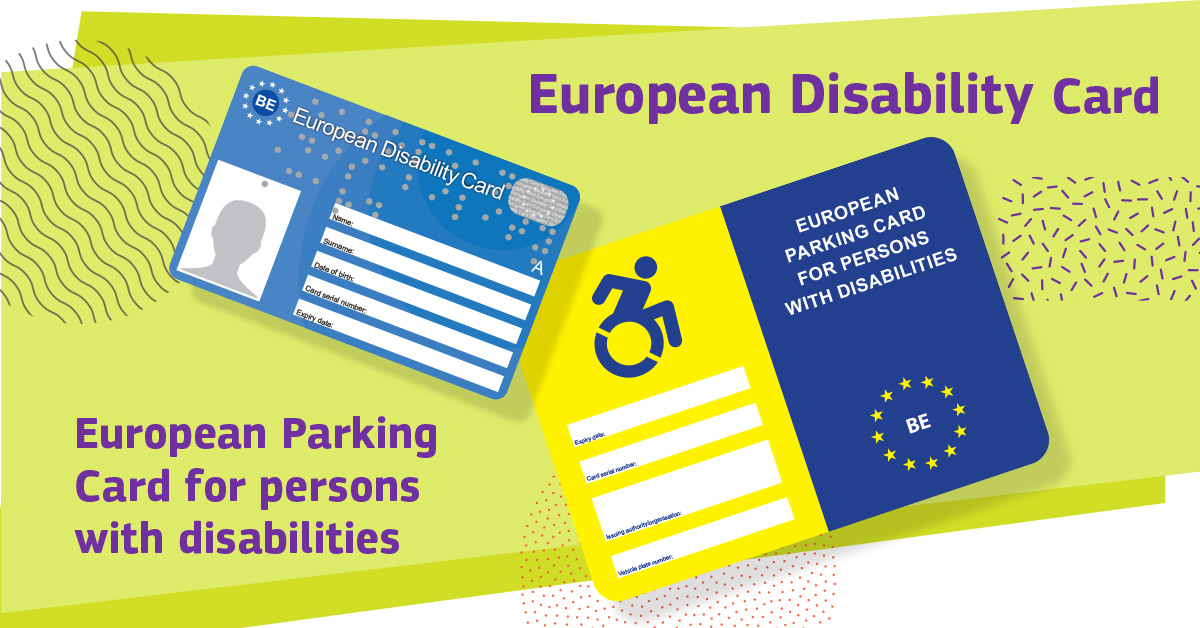
European Accessibility Forum: It will take at least four years for the European Disability Card to become a reality.

The card aims to facilitate the exercise of the right to free movement.

The European Disability Card, which will ensure common rights for people with disabilities in EU countries, is expected to take at least four years to become a reality. The issue of the European Disability Card was already raised in 2009 through the European Accessibility Forum by its president, Ioannis Vardakastanis, who is also the president of the National Confederation of Disabled People (ESAMEA).
 

Speaking to the Athens-Macedonian News Agency (AMNA) on the occasion of his speech about the European Disability Card at the National Informative Meeting “Endocrinology in Thalassemia and Sickle Cell Disease,” which will take place from April 19 to

“The European Disability Card is the identity of disability. I call it the European disability passport. It will ensure that all persons with disabilities, traveling from one EU country to another, will have some common rights. What these rights will be depends on the benefits provided by each country, such as benefits like free movement, access to cultural, sports, archaeological, tourist sites, and other benefits that different countries have, as there are not the same benefits in every country. In Greece, for example, we have the National Disability Card, which is currently digital, and I think around 70,000 Greeks have it. It is planned that when it takes physical form, the National Card will be printed on one side and the European one on the other.”

For the European Disability Card to become a reality, as Mr. Vardakastanis points out, it is not enough for it to be approved by the European Parliament and the Council of Europe, to become a Directive and to be published in the Official Journal of the European Communities, but it must also be incorporated into national legislation within 42 months of publication. He notes that the matter will progress after the European elections and the reconstitution of the European Parliament, and he estimates that publication in the Official Journal of the European Communities will take place next September.

“The purpose of the European Disability Card is to serve the exercise of the right to free movement, which is one of the fundamental principles on which the EU is based. Along with this, there will also be the European Parking Card, which already exists but comes to correct some issues. The European Disability Card concerns all people with disabilities. We wanted, but it was not accepted, the mutual recognition of disability certification. That is, when a person with a disability goes to a European country, the disability certification they have from their country of origin should be recognized, and they should not need a new certification.”

“When a person with a disability goes to another country for studies, work, etc., there is a gap created until their disability is certified in that country. The European Disability Card will cover this gap because the disability certification from the country of origin will be temporarily recognized until the disability is certified in the foreign country. However, mutual recognition of disability is not provided for with the European Disability Card. The important thing is that we are laying the foundation to continue our efforts for a fully integrated approach, which will take some more time. Each country has its own legislation, its own problems, its own history regarding these matters, and it takes time. I don’t justify them; I believe they should have accepted mutual recognition,” added Mr. Vardakastanis.

Eight small buses equipped with wheelchair access hit the roads – National Strategy for Disability coming soon (images)

Eight small buses equipped with wheelchair seating were delivered today, and the National Strategy for Disability will soon be submitted to the Cabinet.

These vehicles, which include provisions for people with disabilities, were given to the “Apostolos Loukas” Special School in Limassol, the “Apostolos Varnavas” Special School in Liopetri, the “Apostolos Pavlos” Private Center for people with intellectual disabilities in Liopetri, the “Evangelismos” Special School in Geri, the Ministry of Education for Secondary Education, and the Social Welfare Services of the Deputy Ministry of Social Welfare.

At the delivery event were the Minister of Transport, Alexis Vafeadis, and the Deputy Minister of Social Welfare, Marilena Evangelou.

Ms. Evangelou noted that, as the responsible Deputy Ministry for the integration of People with Disabilities, the mobility of people with disabilities is a necessary prerequisite for their participation in education, creative employment, independent living, and therefore their social integration.

She also noted that in the coming period, they will investigate additional similar requests to meet other needs. Moreover, she said, they are in dialogue with the directly involved stakeholders to develop a new, modern legislation that will govern all issues related to social integration, inclusion, and support for People with Disabilities.

The revised National Strategy and Action Plan for Disability, which will be in effect until 2028, has been completed and will be submitted to the Cabinet next week. It includes a total of 73 new actions and goals from 8 Ministries and 4 Deputy Ministries. For the first time, the National Strategy and Action Plan is organized into thematic pillars that follow the life of a Person with Disabilities from birth to old age, she said.

Special Education to Undergo Changes in September

The Ministry of Education is ready to delve even deeper into the chapter of Special Education in its effort to implement actions and policies that truly reflect inclusive and unified education in practice.

As “Ph” is informed, from the new school year these issues will take center stage for the responsible Ministry of Education, which has developed a specific plan. Already, some points that have been included in the plans have been recently implemented, according to a responsible source from the Ministry of Education.
 

It concerns the following three important chapters:

>>Preparation of differentiated educational material

>>Preparation for the needs of school assistants and companions for the new school year

>>Teacher training

As we have been informed about the first point, since last March, the preparation of educational material has been completed. This material has been differentiated and adapted to meet the needs of students according to the difficulties they face. The differentiated material has been developed through collaboration with Greece, and as we were informed, clear guidelines and instructions for teaching are now provided in a scientific manner.
 

Regarding the issue of school assistants and companions, information indicates that the Ministry already has a clear understanding of the needs for the new school year. This matter has been a significant concern every year, as the school year begins and children in need of companionship stay at home for days without immediate assistance. What’s different in the process this year is the early collection of clear needs (it’s noted that the number is expected to increase as needs continuously arise, even after the start of the school year). The intention of the Ministry of Education is to record these needs to the fullest extent possible so that they can be addressed promptly to the Ministry of Finance for the necessary budget allocation.
 

It’s worth noting that the issue of companions concerns the Ministry not only in terms of the number of students they will serve for the school year 2024-2025 but also in their employment status. That’s why there is consultation aimed at improving their contracts. It’s recalled that this issue has concerned the Parliamentary Education Committee several times in recent years, in an effort to find solutions to the labor issues that exist with this group of employees.


Regarding the third point, teacher training is expected to be intensified from the new school year so that educators can fully utilize the differentiated educational material that has been prepared.

Furthermore, a key pillar in the upgrading and modernization efforts in this field is the process of reviewing applications for providing accommodations and companions to students. According to our information, the Ministry is taking steps and actions to expedite the procedures in the relevant Committees that examine each case.