
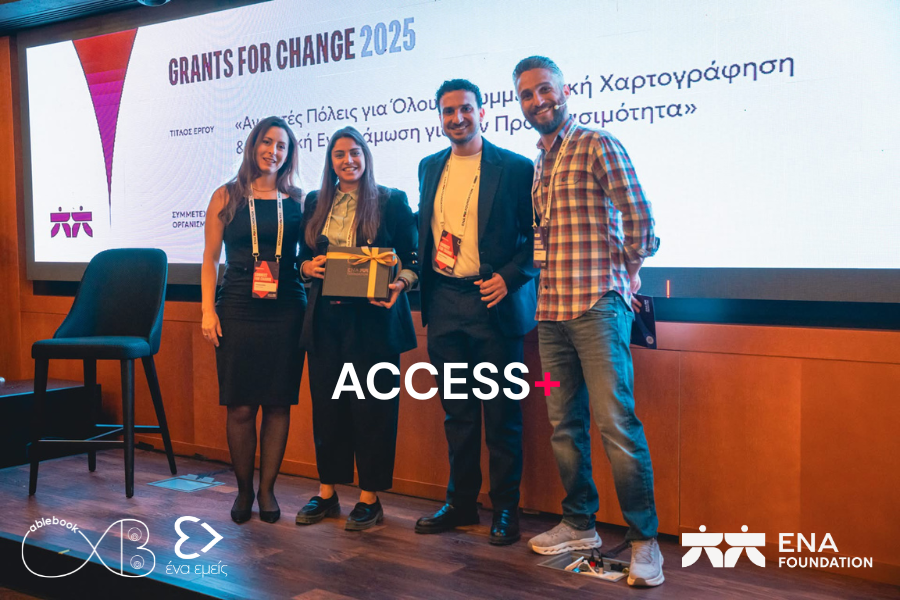
Ablebook and the association “Ena Emeis” are joining forces to implement the ACCESS+ project, funded by the ENA Foundation through the Grants for Change 2025 program. The initiative aims to significantly strengthen accessibility and inclusion in Cyprus, contributing to the creation of more open and functional cities for everyone.
Participatory Mapping with Real Impact
ACCESS+ focuses on participatory accessibility mapping by engaging people with disabilities, young volunteers, and local stakeholders. Through organized field activities, real barriers that affect everyday mobility and access to public spaces are documented. The data collected is transformed into evidence-based recommendations for municipal authorities, strengthening institutional dialogue and creating the conditions for practical interventions.
At the same time, ACCESS+ incorporates a dimension of digital innovation. Within the framework of the project, new features will be added to the Ablebook application, enhancing citizen participation and promoting sustainable social inclusion. In this way, the initiative does not remain a one-off intervention but creates mechanisms with long-term value.
By combining technological expertise with experience in social mobilization, ACCESS+ shapes a comprehensive model of social innovation with long-term impact. Through the active involvement of civil society and collaboration with municipalities and institutional bodies, the project aims to become a best practice that can be expanded to other cities across Cyprus.
Accessibility Is a Right
The essence of ACCESS+ can be summarized in a simple but powerful principle: accessibility is not a privilege. It is a right. Modern cities must therefore be designed with all the people who live and move within them in mind.
ACCESS+ is not simply another awareness project, but a targeted and structured intervention with practical results. Through community participation, the use of technology, and collaboration with institutional stakeholders, it lays the foundations for cities that are more functional, more equitable, and more humane.
Because real progress is measured when no one is left behind—and accessibility lies at the heart of that progress.